How to Build a Calm, Focused Workspace at Home or Shared
Practical ways to reduce noise, clutter and notifications so you can focus at home, in a coworking space or a shared office.
In this article
- Why do interruptions hurt focus so much?
- Where should you set up your desk?
- How do you deal with noise?
- What should be on the desk, and what should not?
- How do you stop digital distractions?
- Which routines help you keep focus through the day?
- What about distractions that come from inside your head?
- How do you make it a habit?
Coworkism earns from purchases made through the MaviGadget links in this post.
The fastest way to a calmer workspace is to cut three things: noise you cannot control, visual clutter, and digital interruptions. Fix those first, then add routines such as focused work blocks and short breaks. The same steps apply whether you work at home, in a coworking space or a shared office.
Why do interruptions hurt focus so much?
Every time you switch from one task to another, your brain needs a moment to catch up. The American Psychological Association notes that switching between tasks costs time and can increase errors. A chat ping, a colleague stopping by or a phone buzz each count as a switch, even if you only glance at it.
So the goal is not a perfect room. It is fewer switches per hour.
Where should you set up your desk?
Pick the spot with the least foot traffic and the fewest things to look at. A spare room is ideal, but a corner of a bedroom or living room works if you can face a wall or window instead of the room.
- At home: avoid the kitchen and the sofa if others use them during your work hours.
- In a coworking space: ask for a desk away from the kitchen, the phone booths and the entrance. Many spaces also have a quiet zone.
- In a shared office: sit with your back to the aisle when you can, so passers-by do not catch your eye.
If you split your week between places, our portable home office kit lists what to carry so each desk feels the same.
How do you deal with noise?
Noise is the distraction people mention most in open spaces. You have three practical options, and you can combine them.
- Block it: noise-canceling headphones or earplugs.
- Mask it: steady background sound such as white noise or quiet instrumental music, which hides sudden sounds like speech.
- Move away from it: book a phone booth or meeting room for calls and deep-focus hours.
If you wear headphones in a shared office, agree on a signal with colleagues, such as a tap on the shoulder for something urgent.
What should be on the desk, and what should not?
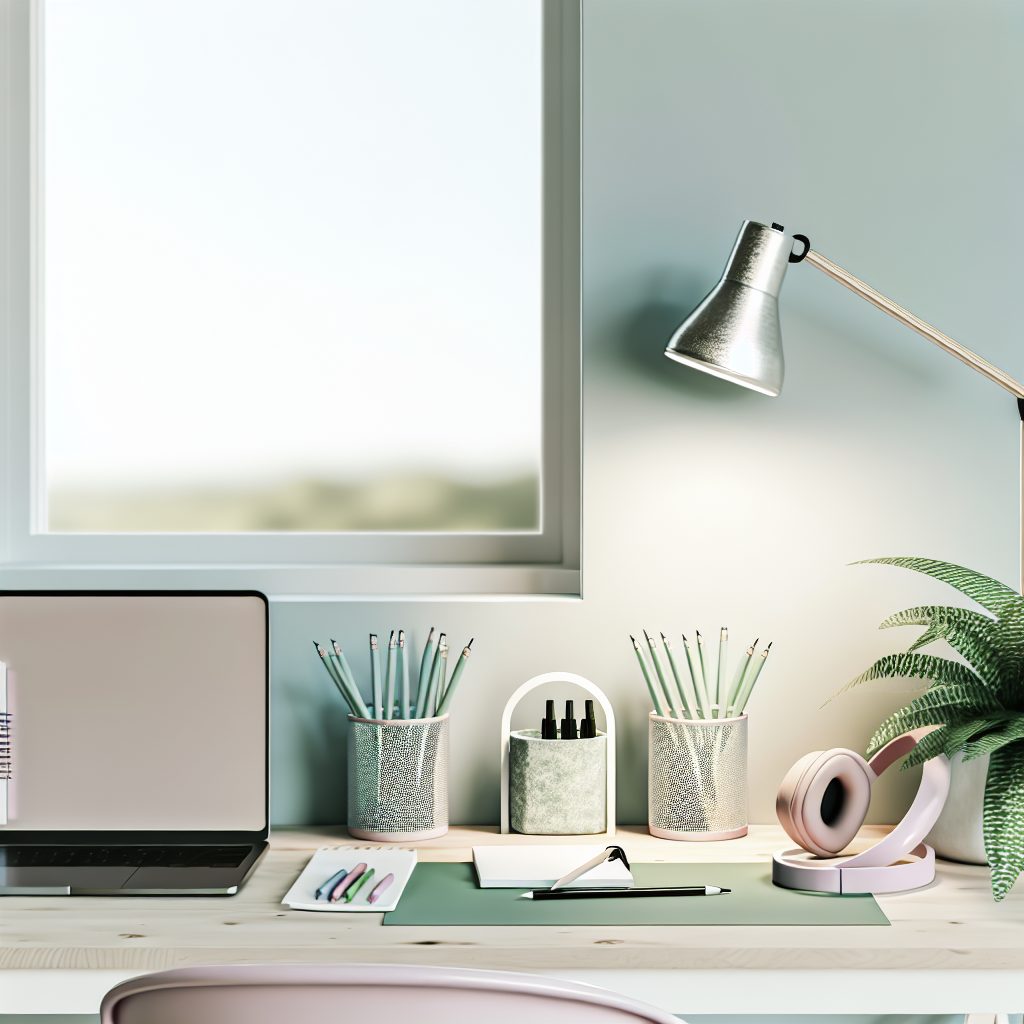
Keep on the desk only what you need for the task in front of you. Clear old cups and loose papers at the end of each day so you start the next one fresh. One or two personal items, such as a photo or a small plant, are fine. A full shelf of objects is not.
Light matters too. Use daylight where possible and add a desk lamp when it fades. Harsh overhead light can be tiring, so aim the lamp at your work, not your eyes. For tools that tidy a desk and light it well, see the Cool Office Gadgets collection at Mavigadget.
How do you stop digital distractions?
Your phone and browser are often louder than the room.
- Turn off notifications for social media and non-urgent email while you work.
- Close tabs you are not using, and use a website blocker if you drift to the same sites.
- Check messages at set times, for example on the hour, rather than as they arrive.
- Set your chat status to "focusing" so teammates know you will reply later.
If your internet is also a source of stress, our guide to fixing unreliable Wi-Fi helps you remove that one too.
Which routines help you keep focus through the day?
Work in timed blocks
The Pomodoro method uses short focused sessions with a break between them. The usual pattern is 25 minutes of work and 5 off, but longer blocks suit some people better. Try a few lengths and keep the one that fits.
Take real breaks
Stand up, stretch, look out of a window or walk around the block. A break away from the screen works better than switching to your phone.
Set boundaries with people
At home, tell family or housemates your focus hours and use a closed door as the signal. In a shared space, say so politely if someone keeps interrupting, and move if that does not help. If your team shares a space for workshops, hosting them in a coworking room keeps the noise away from desks.
What about distractions that come from inside your head?
When unrelated worries keep surfacing, write them on a notepad and return to them later. That gets them out of your head without breaking your task. Slow breathing for a minute before a hard task can also help you settle.
How do you make it a habit?
Change one thing a week, not ten at once. Start with notifications, then add noise control, then the desk. Keep what works and drop what does not. A calm workspace is something you adjust over time.

