How to Design a Coworking Space That Works for Creatives
Creatives need a mix of quiet, light, room to spread out and people to talk to. Here is how to plan a coworking space around those needs.
In this article
- What do creative professionals need from a shared space?
- How much does natural light matter?
- Which zones should a creative coworking space include?
- How do you keep noise under control?
- What about the practical basics?
- How do colour and decor affect the mood?
- How do you build community without forcing it?
- What should you add later?
- Where should you start?
Coworkism earns from purchases made through the MaviGadget links in this post.
A good creative coworking space gives people different places for different kinds of work: a quiet corner to focus, a big table to spread out on, a room to talk and a spot to relax. Get daylight, sound and accessibility right first, then add furniture, storage and community habits that fit the members you want.
What do creative professionals need from a shared space?
A designer, a writer and a video editor do not work the same way, but they share a pattern. They need long stretches of concentration, and they also need to show work, get feedback and meet people. A plain row of desks serves only the first need.
Before choosing paint or furniture, decide who the space is for. A space aimed at illustrators and photographers needs wide tables and wall space. One aimed at writers and developers needs more quiet and fewer shared surfaces. Ask a few likely members what slows them down in their current setup, and design from those answers.
How much does natural light matter?
It matters more than most decor choices. A small 2014 pilot study of day-shift office workers found that those with windows at work received more white light during the day and reported better sleep and quality of life than those without, as summarised by ScienceDaily. The study was small, so it supports planning for daylight rather than proving a result.
In practice:
- Put the main work tables near windows and keep storage, printers and meeting rooms toward the middle of the floor.
- Use glass or half-height partitions so daylight reaches the inner areas.
- Add warm, dimmable lamps for evenings and for screen-heavy work, and avoid glare on monitors.
Which zones should a creative coworking space include?
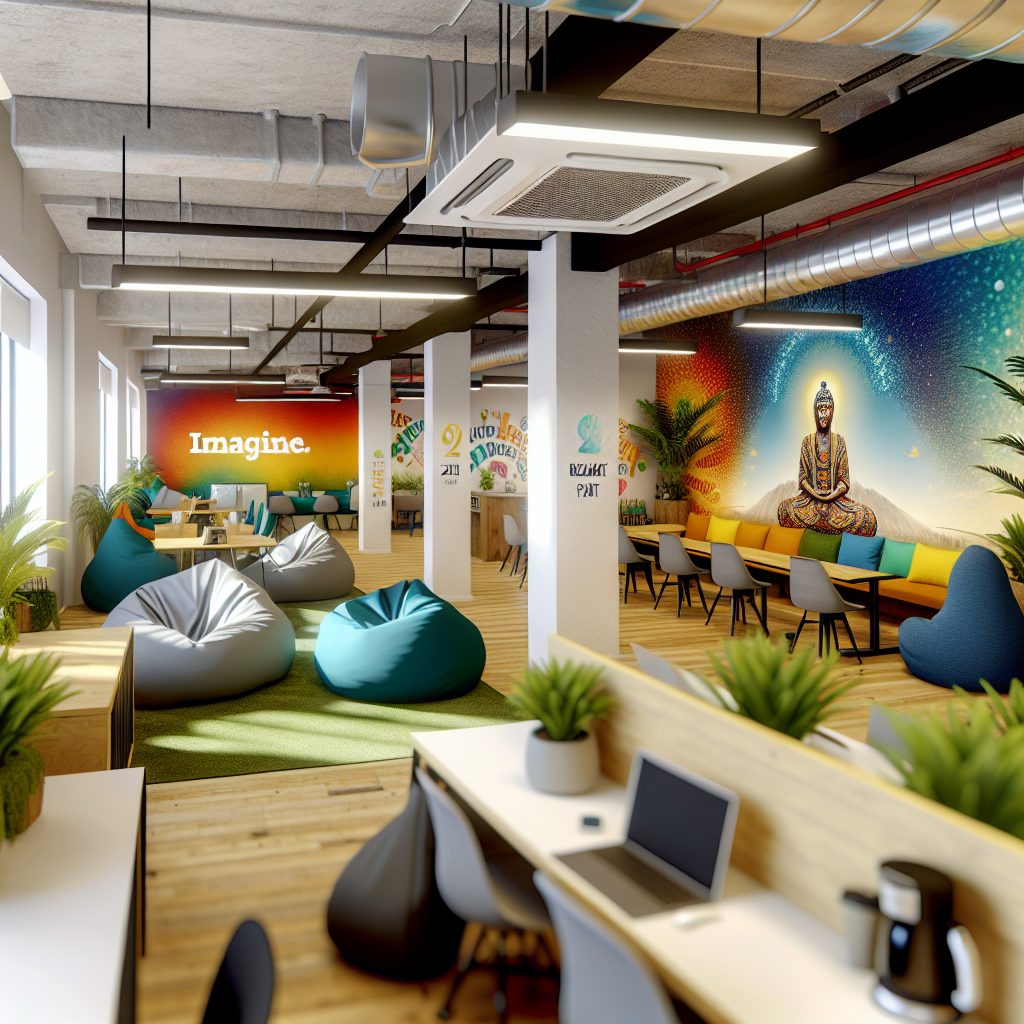
Think in zones rather than a single open room. Each zone has a clear purpose, which also helps members choose where to sit.
| Zone | Purpose | What it needs |
|---|---|---|
| Quiet focus area | Writing, editing, detailed design | Soft surfaces, no phone calls, good lighting |
| Open worktables | Sketching, layout, making | Large surfaces, power at the table, wall space |
| Bookable meeting room | Client calls, reviews | Door, screen, whiteboard |
| Phone booth | Short calls | Sound insulation, a small desk |
| Lounge or kitchen | Breaks and chance conversations | Comfortable seating, drinks, a notice board |
Why modular furniture helps
Creative work changes from week to week. Tables on wheels, stackable chairs and movable screens let you reset the room for a workshop, a critique or an exhibition without building anything new. If you plan to host sessions, our piece on using a coworking space to host workshops covers what the room needs to support them.
How do you keep noise under control?
Noise is the most common complaint in shared spaces, and creatives often need both silence and a little buzz. Separate the loud from the quiet instead of trying to make everything medium.
- Place the kitchen and lounge away from the quiet area, with a buffer such as storage or a meeting room between them.
- Use rugs, acoustic panels, bookshelves and fabric to absorb sound. Hard floors and bare walls make voices carry.
- Offer phone booths so calls do not happen at the desks.
- Set simple house rules, such as headphones for focus time and calls in booths.
What about the practical basics?
Internet and power
Creative files are large, and video calls are routine. A weak connection will cost you members faster than a plain wall will. If you need a refresher on diagnosing connection problems, see this guide to reliable internet for remote workers. Put power outlets at every table, not only along the walls.
Accessibility
Plan step-free entry, wide routes, accessible restrooms and desks at different heights from the start, because retrofitting is harder. In the United States, the ADA design standards set requirements for new construction and alterations. Rules vary by country and by building, so check with your architect or local authority before you build.
Storage and cleanliness
Creatives carry equipment, samples and works in progress. Lockers, shelving and a place to leave a project overnight make a desk feel like a base. Regular cleaning and quick repairs matter just as much, since a tired space says the work is not valued.
How do colour and decor affect the mood?
People respond to colour differently, and there is no formula that makes everyone calm or inventive. A safer approach is to keep walls and large furniture fairly neutral, then bring in colour through art, plants, textiles and signage that you can change cheaply. Let members hang their own work or personalise their area, which makes the space feel like theirs. A small gallery wall of member work also gives visitors a reason to ask what the community does.
How do you build community without forcing it?
Design gives people a reason to cross paths: one shared kitchen, a lounge near the entrance, a notice board. Then add a few optional events:
- Skill-share sessions where members teach something they do well.
- Open studio or show-and-tell afternoons.
- An occasional social evening.
Start small and keep what people actually attend. Spaces that serve specific trades can also offer practical extras. For example, our look at a coworking space as a photography studio alternative shows how one niche can shape the layout.
What should you add later?
Once the basics work, consider smart lighting and climate controls, energy-efficient appliances and quiet wellness features such as a rest room or stretching area. Treat these as upgrades, not a starting point. If your members also work from other places, a portable home office kit can complement what the space offers.
Looking for tools and gadgets for a creative workspace? See the gadgets for creatives collection at MaviGadget.
Where should you start?
Walk the space and list the work your members will do. Map quiet areas, collaboration areas and shared areas on a floor plan, check daylight and noise paths, confirm accessibility rules, and only then pick furniture and decor. That order keeps the budget on what people feel every day.
Frequently asked questions
What matters most when designing a coworking space for creatives?
Does natural light really help people who work in a shared space?
How do I handle noise in an open creative space?
Do I need to make a coworking space accessible?
How can members feel part of a community without forced events?
Sources and further reading
- summarised by ScienceDaily sciencedaily.com
- ADA design standards ada.gov

